Seattle Remodeling Permits Guide: STFI vs Full Review
March 19, 2026
A Homeowner-friendly Guide to STFI Permits vs. Full Plan Review
If you’re planning a home remodel in Seattle, one of the first questions that comes up is: Will I need a permit?
The answer depends on the scope of your project. Some remodels can move forward with minimal review, while larger renovations, additions, and new construction require a more involved permit review and approval process with the city. Permitting can be a real pain in the butt-joint (woodworking dad joke) but it can be an important way to protect your investment, and a reliable design-build team can walk you through the process step-by-step.
Seattle remodeling permits can feel complicated at first, but understanding the two most common types of construction permits—Subject to Field Inspection (STFI) and Full Plan Review—can help clarify what to expect before construction begins.
Below is a simple breakdown of how these permits work and when each one typically applies.
First: Not Every Project Requires a Permit
Before diving into permit types, it’s helpful to know that some home updates don’t require permits at all.
Examples of work that typically does not require a permit in Seattle include:
- Painting or cleaning a building
- Installing or replacing kitchen cabinets
- Replacing interior finishes like flooring, tile, or vanities
- Small repairs under $6,000
- Roofing or siding replacement on detached homes
- Small accessory structures under 120 square feet, such as sheds or playhouses
Even if a permit isn’t required, projects still must meet Seattle building codes and development standards.
Subject to Field Inspection (STFI) Permits
For smaller, straightforward construction projects, Seattle may allow a Subject to Field Inspection permit, typically referred to as an STFI permit.
These permits are sometimes called “over-the-counter” permits because they can often be issued quickly through the Seattle Services Portal.
Why are STFI permits appealing?
STFI permits are generally:
- Faster to obtain
- Simpler to submit
- Less expensive
Because these projects are generally smaller or less complex, they don’t require the same level of detailed plan review as larger construction projects.
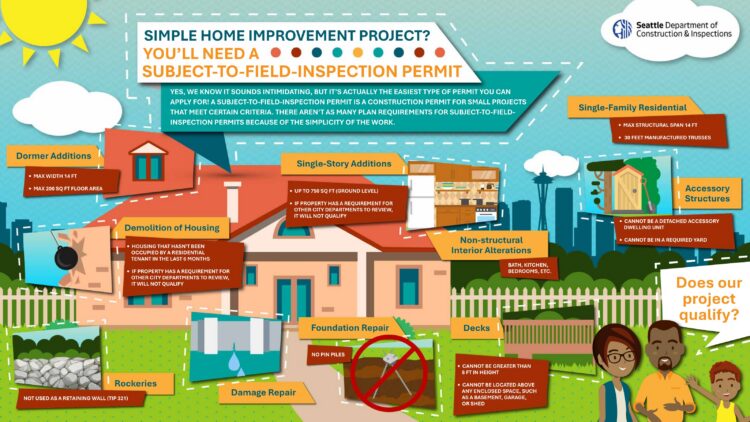
Projects that may qualify for STFI permits:
Some examples of projects that may qualify include:
- Small structural alterations in single-family homes
- Certain foundation repairs
- Small detached accessory structures
- Some interior remodeling projects
- Small ground-level additions
- Dormer additions within specific size limits
Each project must meet specific criteria related to size, structural spans, and site conditions. For example, Seattle allows certain openings in load-bearing walls under STFI permits if they support only one story above and meet span limitations. If you want a more detailed breakdown, review the Seattle Department of Construction and Inspections Tip Sheet #316.
Because these requirements can be technical, it’s common for homeowners to work with design professionals who understand how projects fit within STFI criteria.
How Fast are STFI Permits?
One of the biggest advantages of an STFI permit is the potentially quick turnaround time.
If a project qualifies, approval may happen within a day or two of submission, which is why these permits are sometimes referred to as over-the-counter permits. Currently in Seattle, many STFI permits are issued within about 48 hours, though some may take longer depending on review conditions and city workload. In some cases, approval may take a few weeks instead.
However, it’s important to understand what that timeline actually refers to.
A fast permit approval does not mean the project itself only took a day or two to prepare. The design process—developing plans, coordinating structural details, and assembling the permit documents—typically takes much longer.
For most remodeling projects, homeowners should expect several months of planning and design work before submitting for a permit, even if the permit review itself is relatively quick.
The key benefit is that once the permit is issued, construction can often begin much sooner than with a full plan review permit.
Full Plan Review Permits
Larger or more complex projects require full review permits through the Seattle Department of Construction and Inspections (SDCI).
These permits involve submitting detailed construction drawings that are reviewed by city departments before construction can begin.
Projects that typically require full review include:
- Major home remodels
- Ground-level home additions over 750 sq ft
- Second-story additions
- New construction
- Detached accessory dwelling units (DADUs)
- Significant structural alterations
Because these projects are more complex, the review process takes longer.
How long does plan review take?
SDCI organizes projects into several review categories based on complexity. Simple projects typically finish their inital review in 2-3 weeks, while more complex projects can take 8 weeks.
To get your permit issued, the timeline can vary depending on:
- The complexity of the design
- How many corrections are required
- How quickly responses to corrections are submitted during plan review
- Seasonal demand for permits at the city
Full Permit Review Process
Full plan review permits often involve several steps.
First, permit submissions are scheduled through an intake appointment system, and available intake dates may be several months out depending on demand. The city reviews projects in the order they are scheduled, similar to a queue system. An intake appointment holds your place in line.
Most projects also go through at least one round of corrections, where reviewers request clarifications or updates to the plans before issuing the permit.
Because permit drawings must be submitted as a complete package, coordination between the design team and consultants—such as structural engineers—can also influence timelines if revisions are needed. For this reason, many design professionals plan for several weeks or longer between permit submission and final approval, especially when structural review or additional corrections are involved.
How Long Do Remodeling Permits Take in Seattle?
As discussed, permit timelines vary depending on the type of project and current city workload, but here’s a recap of what homeowners can expect for these two types of Seattle remodeling permits:
- STFI Permits:
- Often issued within 24–48 hours, though some may take a few weeks
- Full Review Permits:
- Intake scheduling may take several weeks to months
- Initial review: typically 2–4 weeks
- Additional time may be needed for corrections and resubmittals
Overall, many projects require several months from design through permit approval, especially for larger remodels or additions.
Permit Costs
Permit fees in Seattle are generally based on the estimated value of the project.
In many cases:
- A portion of the fee is paid when the plans are submitted
- The remaining balance is due when the permit is issued
Because STFI permits require less review, they are usually less expensive than full plan review permits.
Planning Ahead Can Prevent Delays
No one said the remodeling game was easy, it can be full of challenges and obstacles that can throw even the most seasoned of builders. Permitting can feel intimidating, especially if you’re navigating the process for the first time. Between different permit types, review timelines, and city requirements, the process often raises questions early in the remodeling journey.
Experienced design and construction teams can help guide homeowners through these steps—from preparing permit drawings to coordinating with consultants and responding to city review comments.
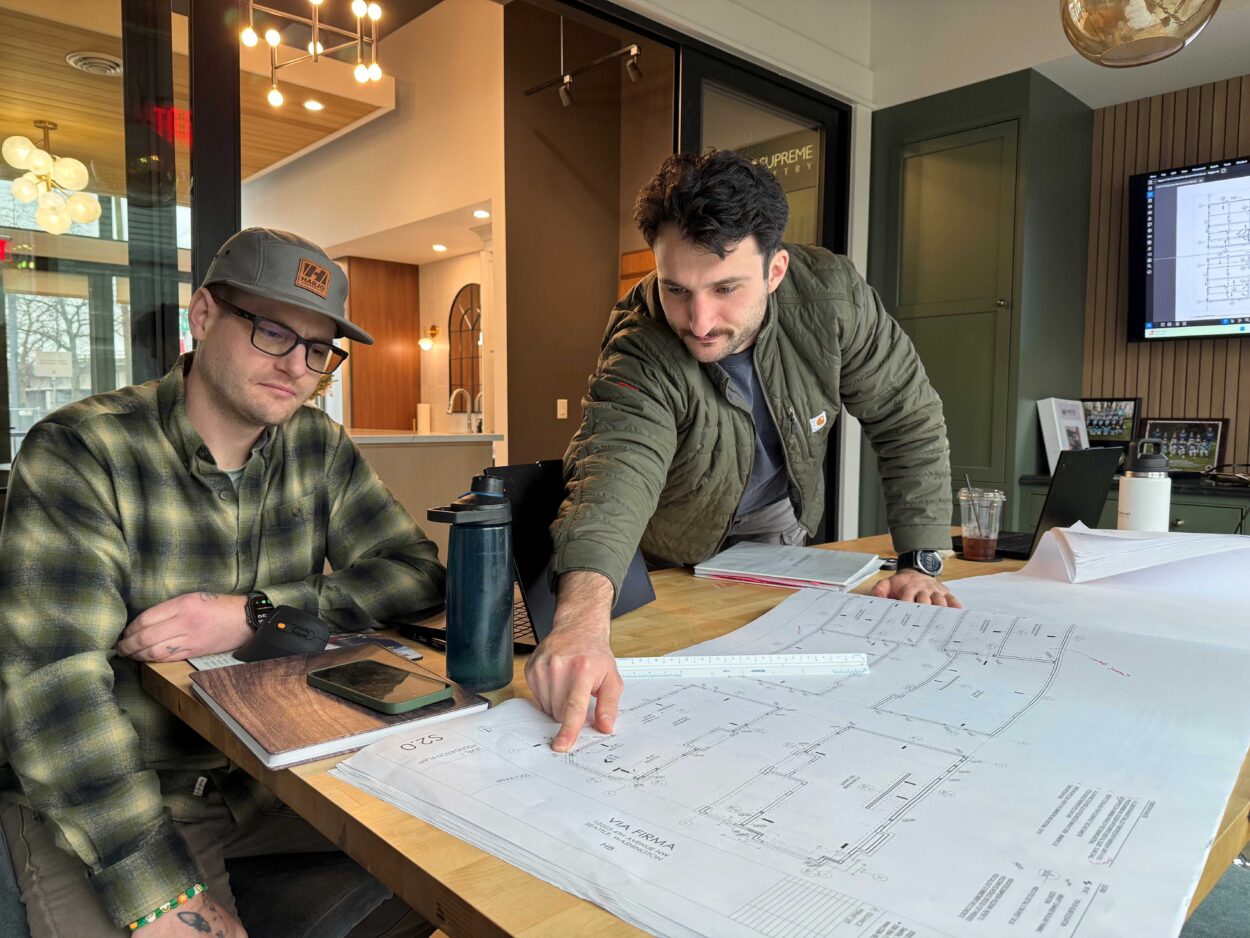
At Harjo Construction, permitting is integrated into our design process. Our team prepares and submits building permits through the Seattle Department of Construction and Inspections and coordinates with city reviewers.
For homeowners considering a remodel, addition, or custom home in Seattle, understanding how the permitting process works—and planning ahead for it—can make the entire project smoother.
Every project is different, but they all still require cooperation with the city and a builder you can trust can carry that wait/weight for you and assist with securing any required permitting so that your remodel can roll on as smoothly and efficiently as possible. If you are interested in learning more about our process or have a project in mind, book a free consultation with our team!
Related Posts: