Seattle Spring & Summer Home Maintenance Checklist
April 29, 2026
We made it through another Seattle winter—and if you’re reading this, you’re officially on the sunnier side of it! The days are getting longer, the flowers are blooming, the birds are chirping, and while we’ll never fully escape the occasional spring shower, it’s finally time to open the windows and enjoy our homes again.
Spring and summer are also the ideal seasons to take care of preventative home maintenance. A little attention now can help you avoid costly repairs later—and keep your home running smoothly through the warmer months and well into fall. Whether you tackle everything at once or chip away over a few weekends, this Seattle Spring and Summer Home Maintenance Checklist will help you stay ahead of the curve.
Indoor Spring Home Maintenance Tasks
Before heading outside, there are a few simple things you can take care of indoors while we’re still in that in-between season.

Switch Ceiling Fan Direction
If you adjusted your ceiling fans for winter, it’s time to switch them back to effectively cool your space as warmer weather approaches. In spring and summer, fans should spin counterclockwise to create a cooling downdraft. It’s a small change that can make your home feel noticeably more comfortable.
Inspect Window Screens & Clean Windows
Warmer days mean open windows—and nothing ruins that faster than a torn screen. We want to let air in, not any pests, so it’s important to make sure no damage was inflicted over the wet and windy winter season.
Check for:
- Holes or tears in screens
- Loose frames
- Debris in tracks
Make repairs as needed, and while you’re at it, give your windows a thorough cleaning inside and out, and make sure locks and hardware are functioning properly.
Check for Air Leaks
Even in warmer months, air leaks can impact comfort and energy efficiency.
Inspect:
- Weatherstripping around doors and windows
- Caulking at frames and trim
- Gaps around vents or penetrations
Sealing these up helps your home stay cooler in summer and reduces strain on your HVAC system.
Moisture & Mold Prevention in Seattle Homes
Seattle’s coastal climate can contribute to high humidity levels year round—and spring is often when hidden issues start to show up, especially in areas that do not have good ventilation, such as attics and bathrooms. Excess moisture and condensation can cause mold growth, wood rot, and damage to insulation if undiagnosed over time.

Inspect Basements, Crawl Spaces, & Attics
Look for:
- Damp spots or standing water
- Musty odors
- Signs of mold or mildew
- Water staining on walls or insulation
Catching moisture early can prevent more serious (and expensive) damage down the line.
Improve Ventilation
Proper airflow is key to keeping moisture under control.
- Open and clear attic and crawl space vents, and if you don’t have vents, consider having them installed (a lack of air flow can encourage mildew, or even cause roof damage during summer heat)
- Use bathroom and kitchen exhaust fans consistently. Give them a good clean and test to make sure they are working effectively.
- Consider adding a dehumidifier in damp areas like basements
Even closets and less-used spaces can benefit from occasional airflow to prevent mustiness. In cities where humidity is consistently higher than 60%, like Seattle, there is potential for moisture condensation, which can lead to mildew and mold.
HVAC & Air Conditioning Maintenance Checklist
Before summer temperatures arrive, make sure your system is ready to keep things cool.

Replace Air Filters
This is one of the easiest and most important maintenance tasks. If you have pets, kiddos, or regular guests, your filters are likely working overtime—trapping extra dust, dander, and allergens, especially when spring allergies are in full swing. Replacing a filter can improve efficiency and lower heating or cooling costs by 5-15%, according to the US Department of Energy.
- Replace filters every 1–3 months (more often with pets or allergies)
A quick filter change not only improves your air quality, but it also helps your system run more efficiently.
Inspect Air Ducts
Take a quick look at visible ductwork for dust buildup, debris, or signs of mold. Clean ducts help maintain better indoor air quality and system performance.
Clean Outdoor AC Unit
If you have an exterior unit:
- Clear leaves, branches, and debris that may have built up over the fall and winter months around the AC unit
- Trim back nearby plants
- Gently clean coils with a hose or vacuum attachment
Good airflow around the unit improves efficiency and cooling performance.
Test Your AC System
Don’t wait for the first hot day. Better to test your air conditioning unit before you absolutely need it later this summer. Give your mind a little extra peace, and test run your AC unit to make sure it is cooling to limit any hot surprises later this summer.
- Set your thermostat lower than the current indoor temperature
- Confirm cool air is coming through vents
- Listen for unusual noises
If anything seems off, schedule service before peak summer demand. If you expect to be running your AC more in the summer, it may be a good time to stock up on your air filters or even consider upgrading your filter to improve air quality such as a high efficiency pleated filter – these filters attract dust and bacteria and trap them inside the filter using electrostatic charge (yay science!).
Exterior Home Maintenance for Spring & Summer
Once the weather stabilizes (we all know that Seattle spring weather can be somewhat fickle), it’s time to take a walk around your home and assess any wear from winter.

Roof & Gutter Inspection
Winter can be tough on your roof.
Check for:
- Missing or damaged shingles
- Moss or algae growth
- Compromised flashing
Clean out gutters and downspouts, and make sure water is flowing away from your foundation. If your gutters have been damaged, repair or replace them as soon as possible. Also inspect flashing around chimneys and vents on the exterior as well. If there is damage or rot, consider replacing before fall/winter.
Check Exterior Siding, Paint, & Sealants
Look closely at your home’s exterior:
- Peeling or fading paint
- Cracked or failing caulking
- Signs of moisture or rot
Spring and summer are ideal times to repaint or reseal areas before the rainy season returns. While you are looking for exterior wood damage, keep your eyes peeled for any gaps or holes in siding, attics or crawl spaces that may be large enough for animals to squeeze through. If you don’t see signs of rot or moisture that need addressing, it may be worth scheduling a house washing or renting a power washer to remove any winter grime that may have built up on your home’s exterior.
Inspect Foundation & Hardscaping
Walk your property and look for:
- Cracks in foundation walls
- Damaged walkways or driveways
- Moss or algae buildup on concrete
Pressure wash any concrete surfaces that may have moss or algae buildup and consider sealcoating asphalt to protect against elements. Clear moss and weeds from joints and cracks in your concrete and finally, check for drainage issues that may be occurring after those spring showers. Addressing small issues now helps prevent larger structural concerns later.
Outdoor Living & Deck Maintenance
This is the season to enjoy your outdoor spaces—so make sure they’re ready.

Deck & Patio Care
Inspect for:
- Loose boards or nails
- Worn or faded finishes
- Unstable railings
Clean and reseal wood surfaces as needed, and power wash patios to freshen them up for the upcoming outdoor season.. Check any railings for stability and prepare them for higher use in the spring and summer months.
Outdoor Features & Fixtures
Before hosting or relaxing outside:
- Check exterior lighting
- Test outdoor outlets (especially GFCIs)
- Clean and prep outdoor furniture
- Inspect BBQs or gas lines
A little prep goes a long way toward making your outdoor space feel like an extension of your home.
Yard, Drainage, & Pest Prevention
Spring is when your yard comes back to life—and it’s also when potential issues become more visible.

Check Drainage & Water Flow
After heavy spring rains, look for:
- Pooling water near your foundation
- Overflowing or slow-draining downspouts
- Erosion or overly saturated soil
Proper drainage is critical in preventing long-term moisture issues, especially for Seattle homes.
Trim Trees & Landscaping
Keep vegetation in check. Take time to inspect any trees that are growing near your roof and home, and consider trimming them back to prevent damage to siding, windows, or roof. This can also limit exposure to moisture, and even pests.
- Trim branches away from your roof and siding
- Maintain airflow around your home
- Reduce moisture buildup and pest access
Inspect Irrigation Systems
If you have sprinklers, inspect for damage from cold weather:
- Test each zone for proper function
- Look for leaks or broken heads, and replace broekn components
- Adjust spray direction for proper coverage and clear any winter build up on nozzles or spray heads
Pest Prevention
Warmer weather brings increased pest activity.
Take a few preventative steps:
- Seal gaps around foundation, siding, and vents
- Check crawl spaces and attics for signs of activity
- Keep landscaping from touching your home
Catching entry points early can save you a bigger headache later in the season.
Inspect Lawn & Outdoor Maintenance Equipment
Before the spring and summer months hit, give your lawn maintenance equipment an inspection and tune up.
- Sharpen any tools/blades and lubricate moving parts as needed
- Charge batteries
- Replace old gas in your equipment so they run smoothly all summer long.
If you have a lawn mower that has been in winter storage, consider changing the oil, replacing spark plugs, cleaning the battery terminals and cleaning its air filters as well.
Spring & Summer Home Maintenance in Seattle: Stay Ahead of the Seasons
Seasonal home maintenance might not be the most exciting way to spend a sunny weekend—but it’s one of the most effective ways to protect your home and avoid costly surprises.
Seattle’s climate presents unique challenges, from persistent moisture to shifting temperatures, and staying proactive with your spring and summer home maintenance helps keep everything performing the way it should.
And if, while working through this checklist, you start to notice recurring issues—moisture concerns, aging materials, or spaces that just aren’t functioning the way you want—those can often be signs that it’s time to think about a more comprehensive update.
If that’s the case, we’re always here to help you think through what’s next.
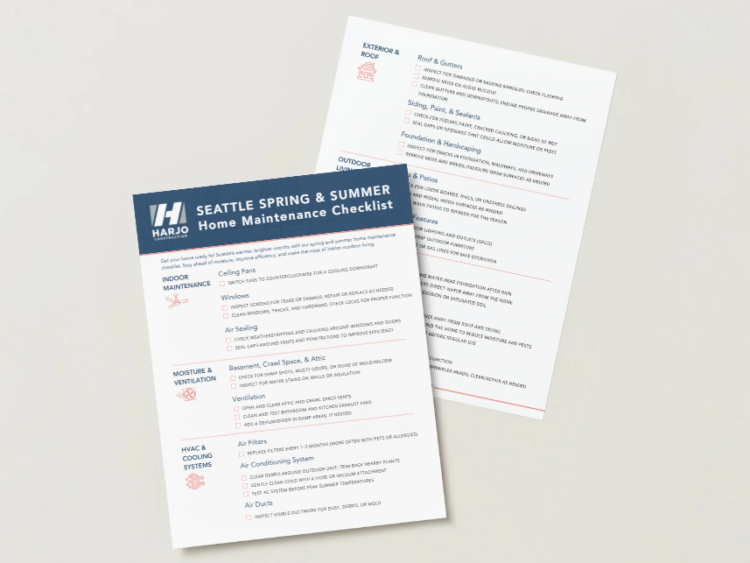
If you would like a PDF of our Seattle Spring and Summer Home Maintenance checklist (pictured above), send us an email and we’ll send you a copy!
Other helpful summer home maintenance links:
Resources:
- US Department of Energy Home Comfort Tips
- US Department of Energy Spring and Summer Energy Saving Tips
- The Seattle Times – Ask Angi: How should I prepare my home for spring and summer?
Check out our related blog posts: Elevating Comfort with Energy-Efficient Remodeling Strategies and Seattle Fall and Winter Home Prep Checklist.