Day in the Life of a Project Manager
May 28, 2026
If a Superintendent is the steady presence on the job site, the Project Manager is the connective thread running through every phase of a remodel — from early budgeting and pre-construction planning to field coordination and final project close-out.
At Harjo Construction, Project Managers work closely with homeowners, designers, Superintendents, and trade partners to keep projects moving forward while balancing communication, budget, schedule, and problem-solving along the way.
We sat down with Lindsay Perrigo, one of our Project Managers, to talk about what the role actually looks like behind the scenes, how projects evolve during construction, and why communication is one of the most important parts of a successful remodel.
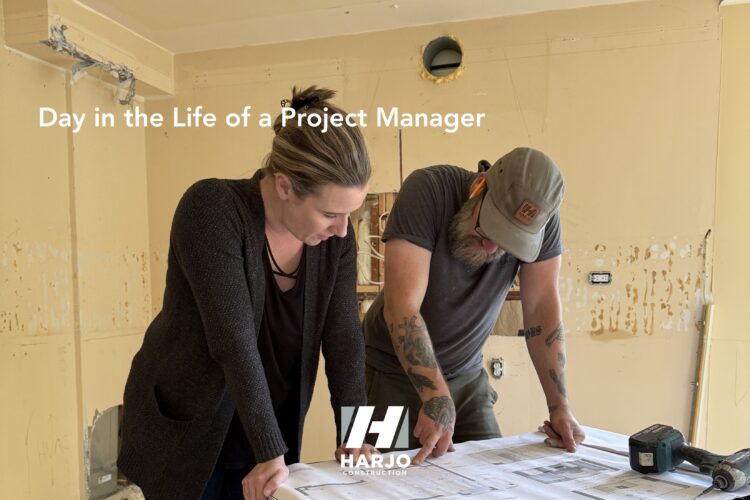
What does a Project Manager’s role look like at a high level?
It’s very diverse. It involves client management, financial management, constructability advising, and team coordination — being able to effectively communicate between the trades, the design team, and the homeowner.
No two days are the same. You can try your best to predict what’s going to happen and sometimes you’re about half right. I appreciate having to think on your feet and make decisions in the field. And no two projects are ever the same, you’re never going to encounter the same clients, the same circumstances, or the same issues, so it’s hard to get bored.
At what point does a Project Manager get involved in a project?
From the very beginning. Project Managers work collaboratively with our sales team to deliver preliminary estimates. We have up-to-date knowledge on pricing, so we’re often the ones creating those.
From there, I’m involved in the internal handoff from the sales team to the project team and the New Client Orientation with the homeowners that officially kicks off the project. I remain the client’s primary point of contact all the way through construction and project close-out, and even through warranty. That continuity is intentional. By the time we’re mobilizing on site or framing walls, the client already knows me, and I already know them — their preferences, their priorities, and what matters most about their home.
What does a typical day look like?
It depends on what phase my projects are in, but there’s usually a mix of field time and office work.
I might stop by a job site on my way into the office to check on progress, say hi to a client who’s living there, and flag anything that needs attention. Then it’s emails, preparing budgets, attending meetings, and working through whatever that day brings — which is rarely exactly what I planned.
When projects are active in construction and in the early stages, I might be on site 50–70% of the time. Right now, with several projects in pre-construction, I’m probably closer to 10% field and 90% office. But that shifts constantly. I’ve prepared budgets sitting on the floor of a job site while a hardwood installer was working in the next room, and taken client calls from a demoed attic while coordinating with carpenters on a staircase install. You find a way.
How does your day change depending on the phase of a project?
In the early stages of construction, you’re on site a lot more because that’s when you find out whether conditions are what you thought they were. As the project progresses into phases like drywall or paint, things settle into a steadier rhythm and you have more time to focus on other projects or pre-construction work. Because our projects are always staggered, I’m usually managing multiple phases across multiple jobs at the same time.
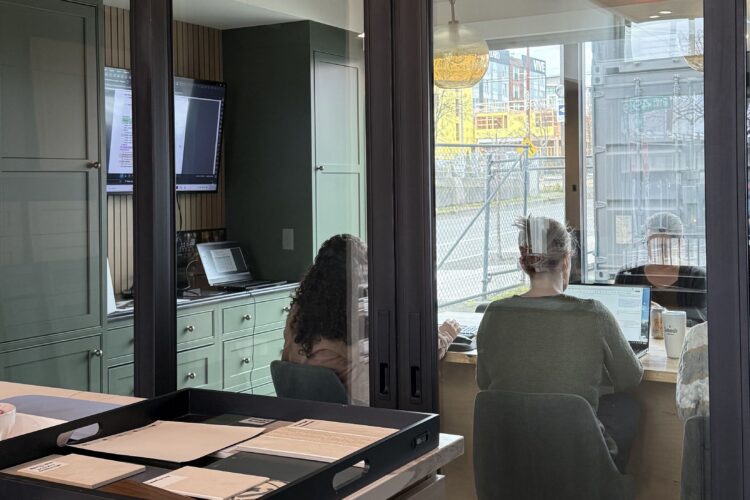
How do you work with the design team?
We meet weekly during pre-construction to review all active projects. The focus is usually on schedule adherence, constructability, and discoveries that have come up during the design process. I’m there to lend another perspective or suggest solutions, and to help make sure we’re doing things in the smartest and most efficient way possible for our clients.
The designers run client meetings in pre-construction and create the agendas, but it’s a collaborative effort. If a more challenging question comes up — something about process or constructability — I can step in to help work through it.
As the project approaches the final budget review and moves into construction, I take the lead. The client won’t be seeing the designers as often anymore, and the field team is taking over. I serve as the through line, making sure the field team understands the full scope, any project-specific nuances, and the client’s expectations. I also make sure the client feels connected and informed as things shift from design to build.

How do you collaborate with Superintendents?
It’s definitely a team relationship. We have a daily morning huddle at 7:30am where Superintendents and Project Managers go over priorities for the day, any questions or issues on active jobs, and what’s planned for the following day. It’s usually quick, but having that daily touchpoint makes a real difference — we stay much more connected than we did when it was a longer meeting once-a-week.
Beyond the daily huddle, we have weekly internal project meetings to review schedules, timelines, materials, and any changes or developments from the week before. And beyond the meetings, it’s a lot of calls, Teams messages, and emails.
The Superintendent takes the lead in the field and manages the day-to-day relationship with the client on site. If a client is calling me directly, I know there’s usually a question or concern that needs attention — and that’s part of the job.
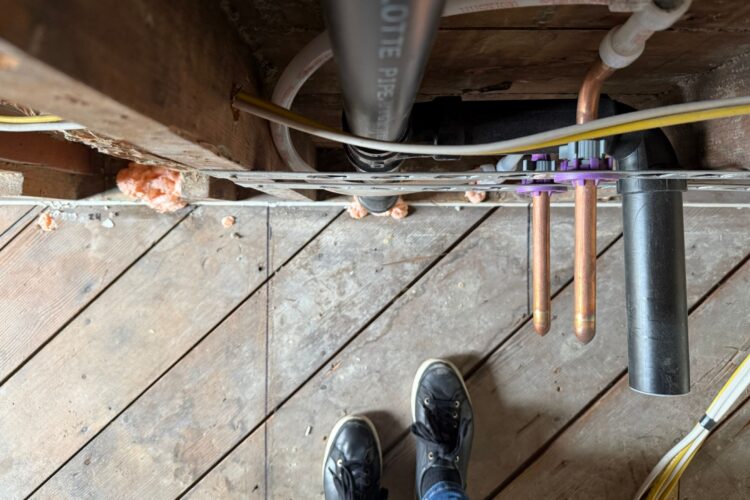
How do you handle unexpected issues or changes during construction?
First, gather as much information as possible before making a decision so it can be as informed as it can be. Then, the most important thing I can do for a client is forecast the potential schedule or financial impact clearly — and give them options. If there’s a cost impact, I try to present at least two paths forward. When people only get one option, they can feel cornered. Having a choice gives them agency, even when the circumstances aren’t what anyone planned.
Take asbestos abatement, for example. On one project, we had done thorough testing before work began, but when we pulled up the cabinets, there was a layer of sheet vinyl underneath that we couldn’t have found earlier. We stopped, had it tested, and confirmed it needed to be abated. That meant waiting on a permit, which took about a week for the square footage involved. Guiding the client through that process, explaining the why behind the delay, and helping them see the bigger picture — that it’s better to have it out of their home — is a core part of the job.
The same principle applies when we find rot or structural issues during demo. There’s never going to be a better time to fix the framing in the corner of your house than when everything is already open and nothing is finished. Those conversations can be a little painful, but they’re a lot less painful than discovering the same problem later.
How do you balance budget, schedule, and scope when things shift?
In pre-construction, there’s a lot more flexibility — reviewing scope, exploring material or subcontractor options, finding ways to reduce cost or time before work begins. Once you’re in the thick of construction, you have less room to maneuver, so the work on the front end really pays off.
When something shifts mid-project, I try to find a creative solution that minimizes the impact and always present options rather than a single path. And I’m honest about the implications — schedule, cost, and scope all connect, so if one changes, the client needs to understand how it affects the others.
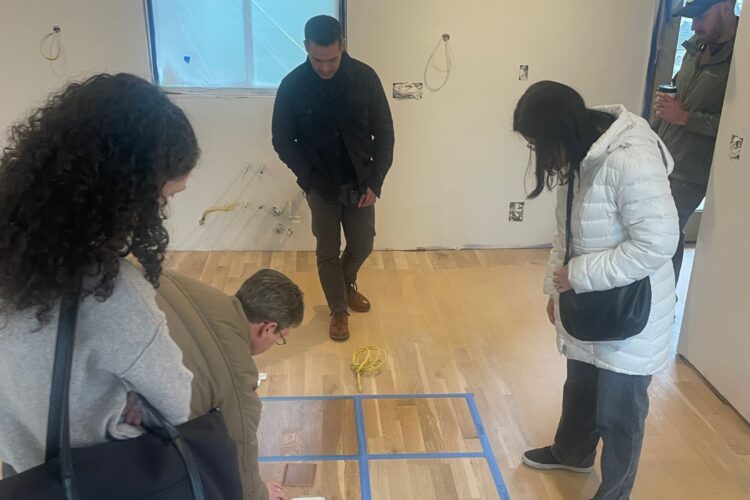
What does a smooth project actually require behind the scenes?
A lot of pre-planning. The more attention and thought you put in on the front end, the smoother the execution tends to be.
Beyond that, it’s constant communication — between me and the Superintendent, between the field team and the client, and within the broader project team. It’s making sure materials are ordered correctly and delivered on time. It’s making sure trades understand the scope and have what they need to execute it well. It’s making sure the client knows what they’re getting, and that what shows up matches what they imagined.
Most of the time, if a client doesn’t see any of the coordination happening behind the scenes, that means it’s working. That’s what good project management looks like.
What do you wish every homeowner knew before starting a remodel?
There are always unexpected things that happen. No matter how well you plan, it’s always something. Have a contingency budget — we don’t want you to go broke doing this, and your final budget should never be at the absolute top end of what you can manage.
But beyond that: the whole point of having a Project Manager is because the unexpected is, well…expected. That’s why we’re here. While there’s always something that comes up, that concept in and of itself isn’t a surprise to us — it’s what we’re built to handle.
And at the end of the day, the projects and clients we take on aren’t just line items or schedules on a calendar. We genuinely care about the people we work with and the homes we’re helping create. That investment shows up in the communication, planning, and problem-solving that happens behind the scenes every day.
Interested in learning more about how our team approaches project management? Get to know our team or reach out to chat about a potential project.
Related Posts:
- Day in the Life of a Superintendent
- Coming soon: Day in the Life of a Designer